

The "Minimum Wage" is more than simply a number on a payroll slip in the Philippines; it is a gauge of the nation's economic well-being and a topic of ongoing discussion among employees, employers, and legislators. As of May 2026, the Department of Labor and Employment (DOLE) is receiving high-stakes applications for additional raises, and the discussion has reached a fever pitch with the implementation of new wage tranches.
For the individual on the ground, however, what does this really mean? And what impact does it have on the growing divide between corporate managers and entry-level employees?

In the Philippines, wages are established regionally. This indicates that the minimum wage is set by Regional Tripartite Wages and Productivity Boards (RTWPBs) depending on local living expenses and economic situations rather than being the same nationwide.
For example, as of May 2026, the National Capital Region (NCR) currently has the highest rates at ₱695 per day for non-agricultural workers (Locus, 2026). Northern Mindanao (Region X) & Caraga (Region XIII) saw increases on May 1, 2026, bringing their rates to ₱500 and ₱475, respectively. Meanwhile, the Bangsamoro Autonomous Region in Muslim Mindanao (BARMM) receives the lowest rates still hovering around ₱366–₱411 (Locus, 2026).
Although these figures are "all-time highs" in theory, the reality for workers is often less celebratory.

A pay increase is a two-edged sword for the typical Filipino worker. On the one hand, it offers a little respite from the growing price of fuel, power, and rice. On the other hand, inflation frequently eats up the profits.
The "Living Wage" Gap: According to research by organizations like the IBON Foundation, even at ₱695 per day, the minimum wage is not enough to cover the estimated ₱1,200 required for a family of five to live comfortably. Instead of accumulating savings, this leads to a cycle in which employees are constantly "making ends meet" (MCG, 2026).
Purchasing Power: Firms, particularly small and medium-sized firms (SMEs), frequently pass on rising wages to their customers. This implies that a ₱5 increase in a worker's daily commute or meal might instantly offset the extra ₱35 they make.
Job Security: In order to maintain profitability, aggressive salary increases may have "unintended consequences," such as hiring freezes or, in severe situations, downsizing (Gabutan, 2026).

Wage distortion is one of the most complicated consequences of minimum wage increases. The "pay hierarchy" is disrupted when an increase in the floor salary brings minimum wage workers so near to managers' or supervisors' salaries. Morale can drop for non-minimum wage earners as they may feel that their years of experience and added responsibility are not financially being recognized.
In order to address this issue, the National Wages and Productivity Commission (NWPC) recommends that businesses make "vertical adjustments" by increasing the pay of employees who earn more than the minimum wage in order to preserve equity (Chua, 2026). Organizational conflict results from the fact that not all businesses have the resources to do this.
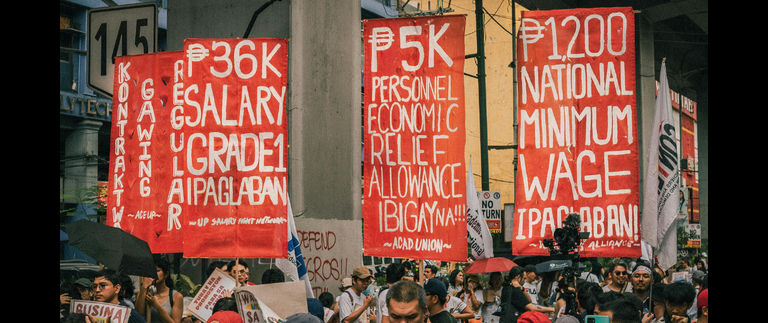
As of May 2026, a number of labor organizations had submitted petitions to almost increase the minimum wage in the NCR to ₱1,200 (Sampang, 2026). DOLE is scheduled to decide on this by July 2026, but the business community is still cautious due to possible "economic shocks."
In the Philippines, setting the minimum wage still requires careful consideration. Finding the "sweet spot" between keeping businesses afloat and making sure the people creating those firms aren't living in poverty is a challenge.
Hothouse Management Consultancy would be glad to assist you in your wage distortion struggles, implementation of Productivity-Based Incentive Schemes (PBIS), compliance audits and risk mitigation. We understand how MSMEs navigate the current Philippine workplace especially in these challenging times of economic shifts.
References: